Tagin, Dress, Staples, Textile

Food and Attire of Tagins

Traditional food and outfits
Key Takeaways

  • The local food, way of cooking and the local wine of Tagins.
  • The traditional attire of Tagins.

Food:
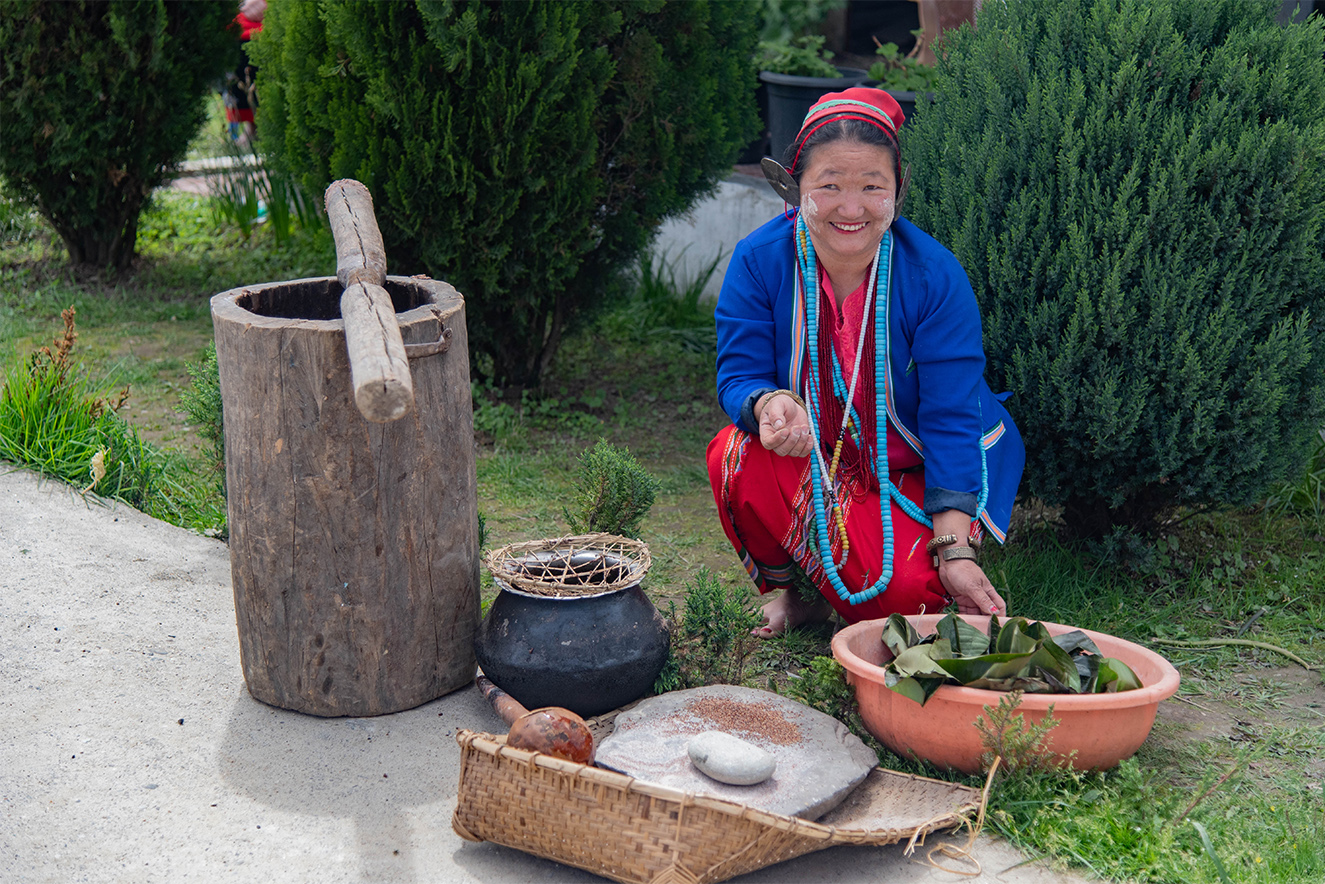
The Tagins practice Jhum cultivation. The women are experts in using their traditional sustainable methods of cooking locally grown rice, maize, millets alongside different kinds of root vegetables and sides of fish and meat which are integral to the Tagin diet. The paddy and marwa grinding container, ‘Chingpa’ is used to grind the grains after harvest). Additionally they consume various kinds of roots, fruits and tubers. Fish and meat are an integral part of their diet. Those are often dried, cured and preserved in many ways. They serve food on a leaf kept in a round bamboo serving basket called 'Pero'. A large basket for keeping vegetables is called 'Tungchak'.
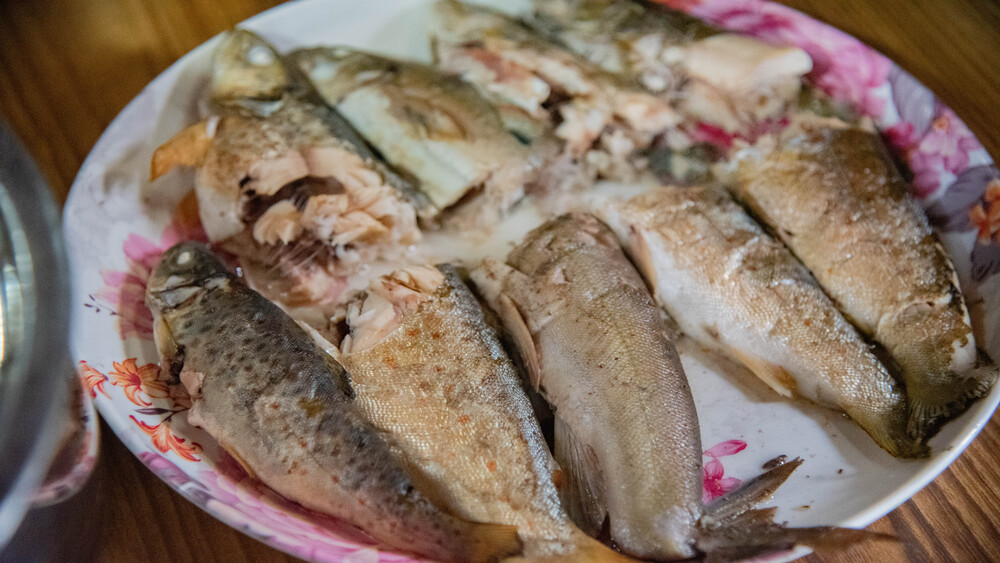
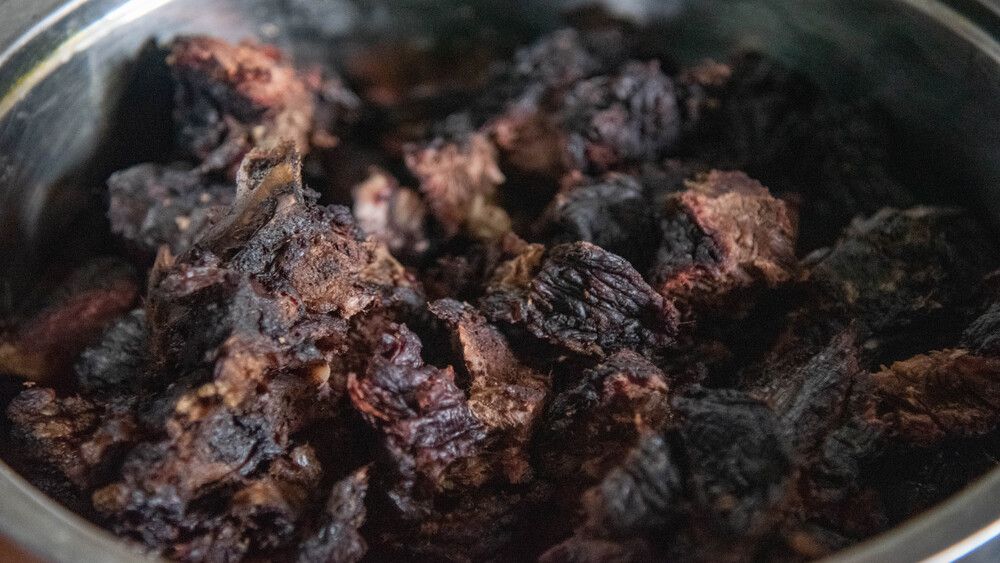
Apo, their local drink is home made from marwa or millet. Diverse food spread includes Tagin Ongya, a leaf herb preparation, Saba Adin (dry mithun meat), Mui (trout fish), Erek Adin (pork) and other local preparations.

Attire:
The main dress is in red and maroon colours which constitute the identity colour of the Tagins. The women are known to wear red pattern ‘Gale’ which is a wrap around skirt while men wear a longer reddish overcoat wrapped around their body, a long beaded necklace and a sword hanging around their waist. The women adorn their dresses with the belt called ‘Dingse’ and a shoulder band of small metal bells. These bells are called Jhungrom. It is part of the Tagin wedding tradition to present the daughter with a set of bells during marriage. The women also wear many ornaments. Their traditional necklaces are called Golpota, Tasing, Singtir, long white necklace and Taming with red beads. Their ear rings are called Rong Bing which nowadays are made of wool as an innovative fashion wear. Their bangles come in different designs and are called Koji and Kembun. They also wear ankle belts. Tagins also wear different styles of hats and caps with different names as for example Tunki, old kinds of hats caps are commonly called Dumluk. They also wear jackets called Jeti Laklik. The Tagin’s attire has a typical colour combination in their patterns and motifs that signify nature. These colours are yellow indicating sun, green indicating the earth, white indicating snow and blue indicating sky.

Tagin men during festival

Traditional Tagin men jacket and scarf

Traditional oranament of Tagin women

Subscribe to Blog for updates